Trainer Approach Courses Formats How to Book Book Training →

Media Training Southeast Asia

One bad interview
can follow you
for years.

When the camera is on, there is no margin for error. Ramon Stoppelenburg prepares executives, spokespeople and organisations across Southeast Asia for the moments that define reputations — live interviews, press conferences and crises that unfold in real time.

This is not just media training. This is preparation for public exposure under pressure.

Most clients do not come to this work because they want media training. They come because something is coming — an announcement, a crisis, a transition — and they need to get it right.
Media training in action
Available in Phnom Penh  ·  Bangkok  ·  Chiang Mai  ·  Ho Chi Minh City  ·  Hanoi  ·  Singapore  ·  Kuala Lumpur  ·  Jakarta  ·  Bali  ·  and beyond

You don't get a second take on live television.

Most organisations do not lose control in a crisis because they lack information. They lose control because the person speaking does not know what to say under pressure.

One answer becomes the headline. One hesitation becomes the clip. One sentence — taken out of context — defines the narrative.

By the time communications teams step in, it is already public.

This work exists to prevent that moment.

15+
Years working across Asian and international media
8
Countries in SEA where training has been delivered
1:1
Intensive one-on-one sessions, anywhere in the region
0
PowerPoint slides. All training is camera-on and practical
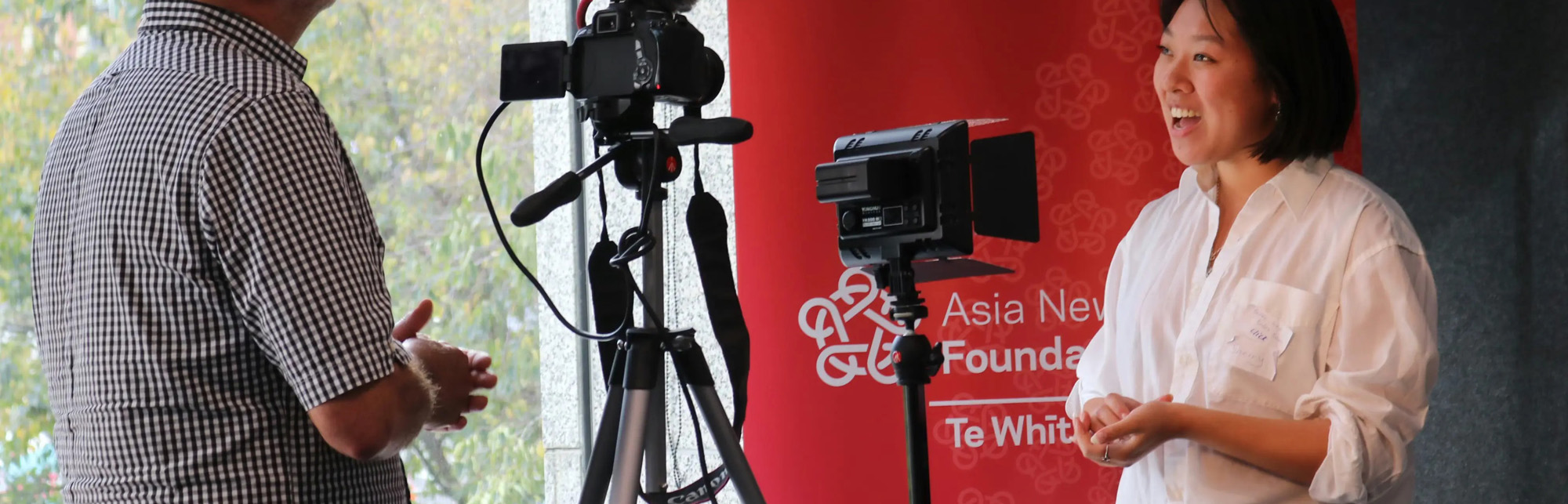
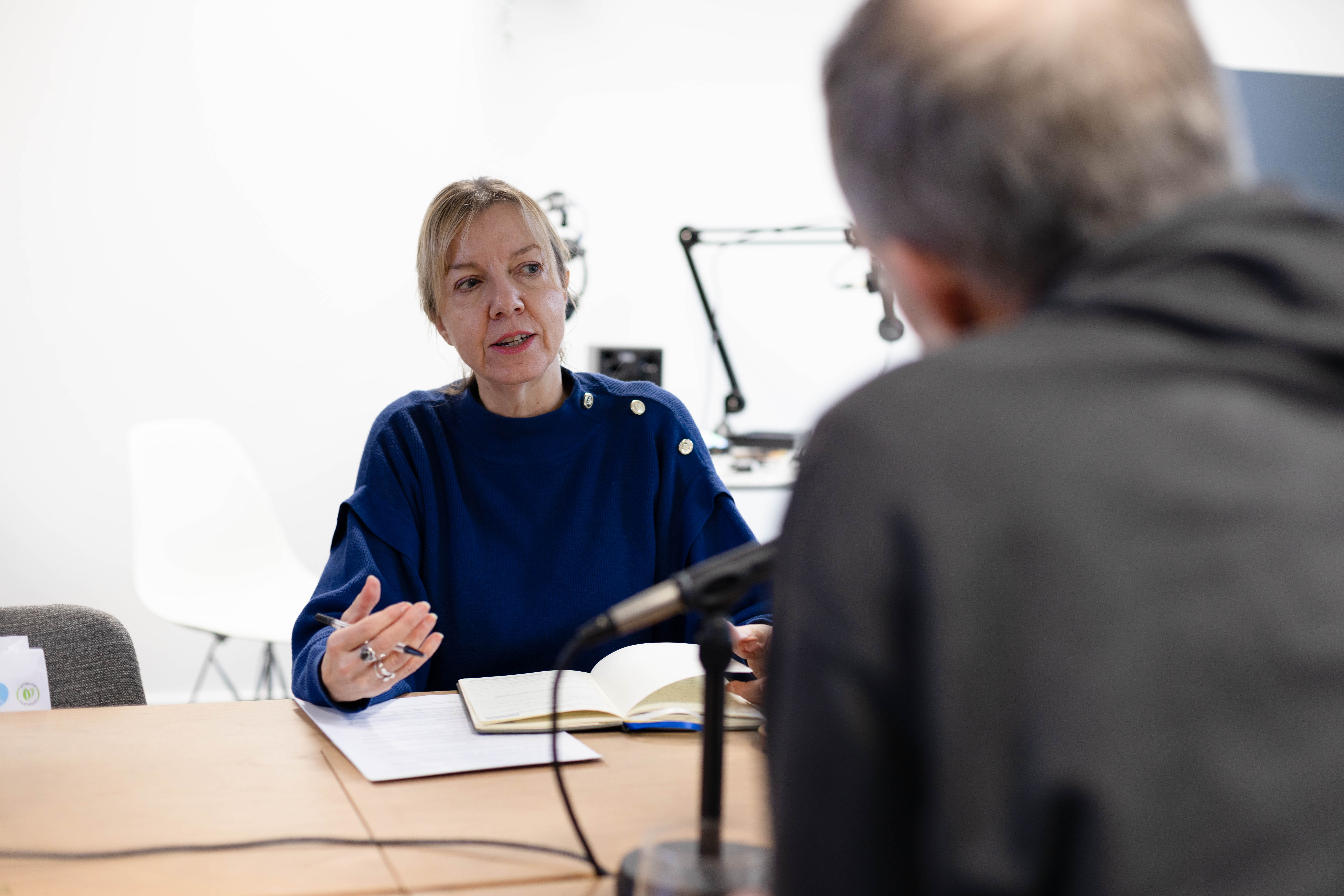
Media interview training session in Southeast Asia
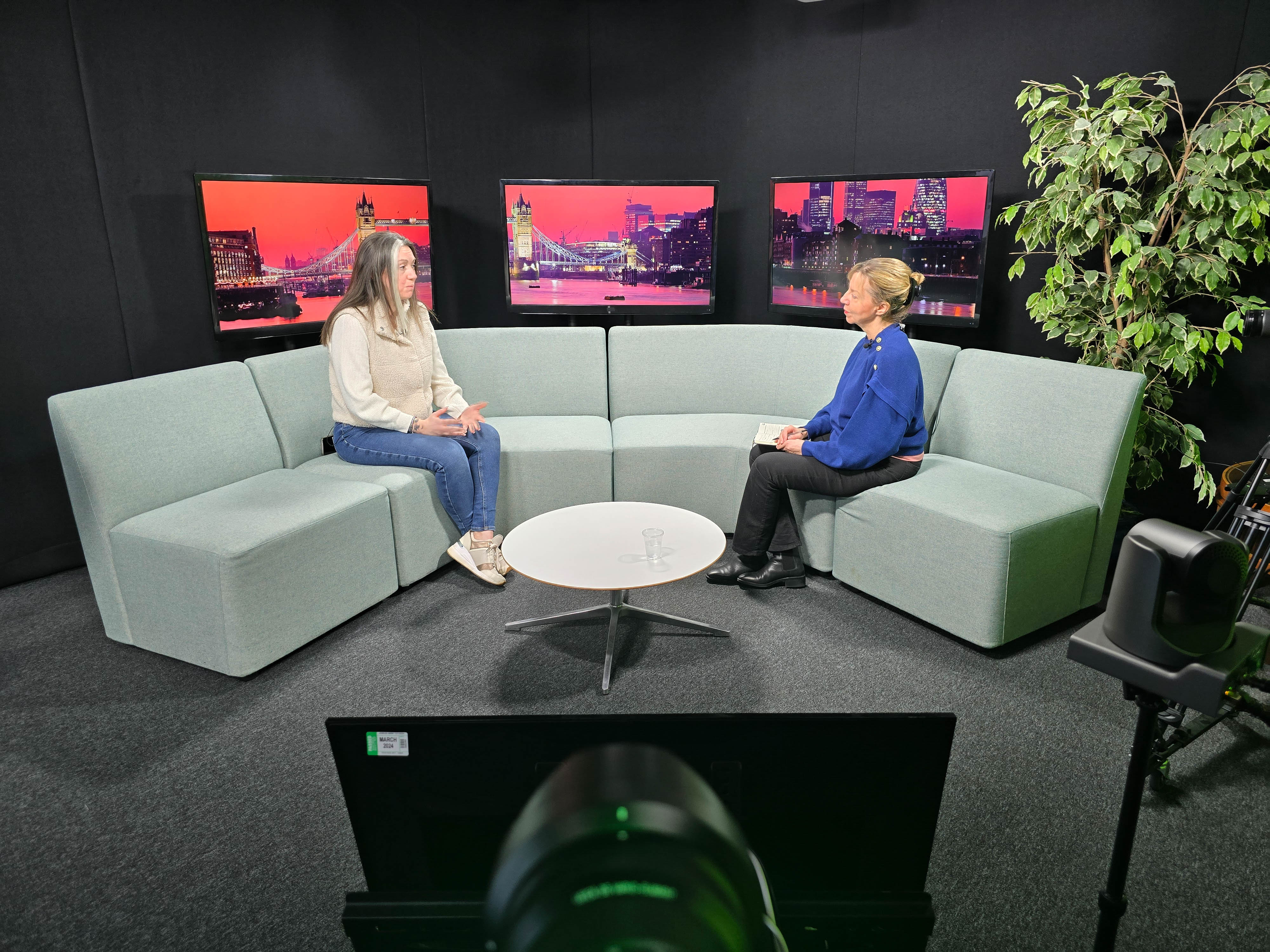
On-camera interview simulation — the pressure is real from the first question

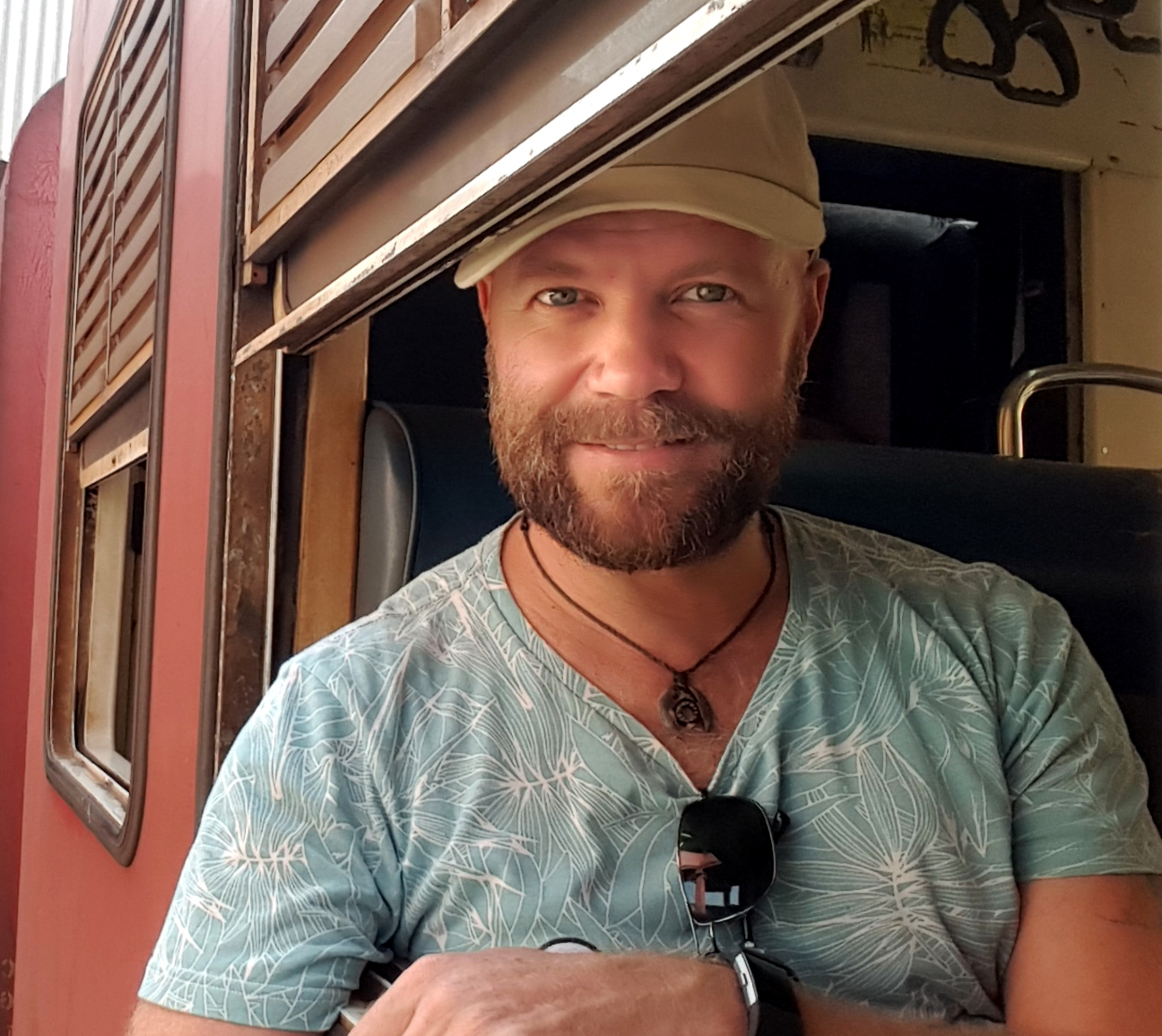
Ramon Stoppelenburg

Ramon Stoppelenburg is not a communications consultant. He is a journalist who has spent over 15 years on the receiving end of interviews — asking the questions, pushing for answers, deciding what becomes the story.

He trains from that position. Not how to "perform well," but how interviews actually unfold, where they turn, and what journalists do with the answers they are given. The approach is forensic. The knowledge is editorial, not managerial.

Based in Phnom Penh since 2008. Dutch journalist, author and broadcaster. Founder of Lord Penh, one of Southeast Asia's longest-running independent media operations.

When you book through Lord Penh, you are not hiring a training provider. You are bringing in someone who understands exactly how you can be exposed — and how to prevent it. No associates, no juniors, no franchised curriculum.

Ramon Stoppelenburg — media trainer, Southeast Asia
NationalityDutch
BasedPhnom Penh, Cambodia
BackgroundJournalist, author, broadcaster
LanguagesDutch, English
Training delivered in8 countries across Southeast Asia
BookingBy organisations only · in person only
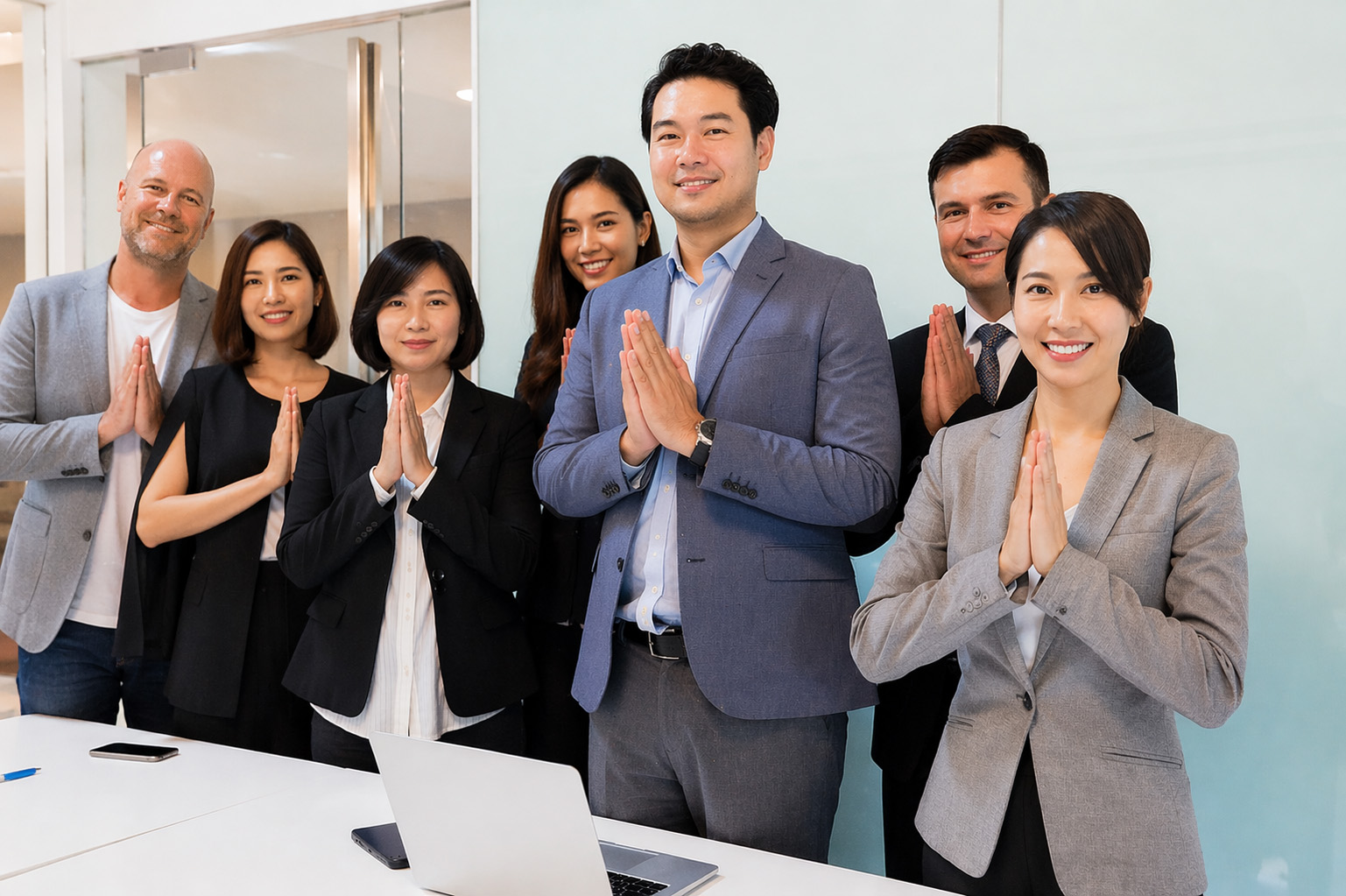
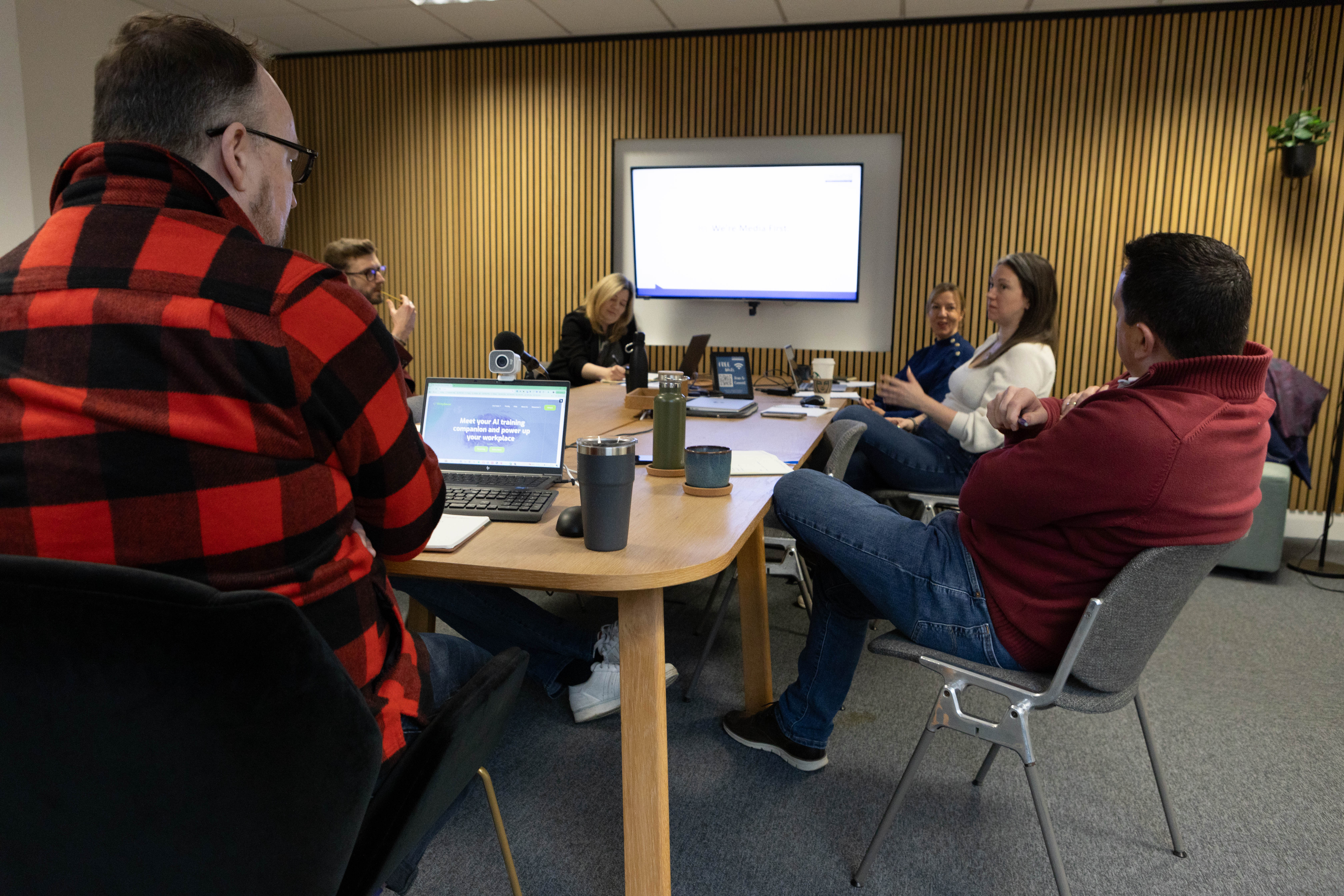
Ramon Stoppelenburg with a group training session — Southeast Asia

The approach

Trained by a journalist. Not a consultant.

This is not a classroom. There are no slides, no theory and no safe practice rounds. The work is built to replicate the exact conditions where things go wrong — time pressure, incomplete information, and questions designed to destabilise. Everything is done on camera. Everything is played back. Nothing is softened.

Simulated hostile interviews

Not practice questions — real exposure. You will be asked the question your organisation does not want to answer. You will answer it on camera. Then you will see exactly what happens when you do. Then you will answer it again until it holds.

On-camera playback with critique

Playback is where most people realise the gap between what they think they said and what they actually communicated. That gap is where reputational risk lives. You see it, you understand it, you fix it — immediately, in the same session.

Crisis messaging under time pressure

In a real situation, you do not get time to think. You get a call. You have minutes. The answer you give becomes the first version of the story. This is drilled until the structure holds — not as preparation, but as instinct.

Message architecture built for your context

Most organisations already have messages. Very few have messages that survive a hostile question. Those are built here — in plain language, tested under pressure, built for Southeast Asian media dynamics, not London or New York templates.

The difference This compresses the worst-case scenario into a single day — with the opportunity to correct it. Participants leave with answers they can use immediately, including a tested response to the question they were hoping would not be asked. Most people leave a generic training feeling vaguely better. People who work with Ramon Stoppelenburg leave knowing exactly what to say when the camera goes on. When the real interview comes, it is no longer unfamiliar. And that changes everything.
Journalist interviewing a spokesperson on camera — Southeast Asia

What actually happens

What it feels like to be in the room.

01

You sit down. The camera is already on. Ramon doesn't explain what is about to happen. The first question lands before you are ready.

02

It is not a hostile question yet. It is an easy one. You answer it. You feel fine. Then you watch it back. You see the pause. You see the glance. You hear the filler word you did not know you used. You understand, for the first time, what a journalist sees.

03

The second round is harder. The question is the one you were hoping to avoid. The one about the lawsuit, the redundancies, the failed product, the incident. You answer it. Badly. You watch it back again. Then Ramon shows you exactly why it went wrong — and exactly what to do instead.

04

By the third round, something has shifted. You know your messages. You know your bridges. You know which words land and which ones bury you. The camera is still on. You no longer feel it the same way.

05

By the end of the day, you have been through a hostile press conference, a doorstep ambush and a live broadcast Q&A. You leave with the recording, a written critique and a set of messages you have actually tested under pressure — not just written on a slide.

Before: vague answers, defensive instincts, over-explanation under pressure, no tested response to the question that matters most.

After: controlled, concise, message-led. A tested answer to the worst question. A recording that shows exactly what changed.

That is not a training day. That is the worst interview of your life, compressed into eight hours, with someone on your side showing you how to fix it. When the real thing comes, it will feel familiar.

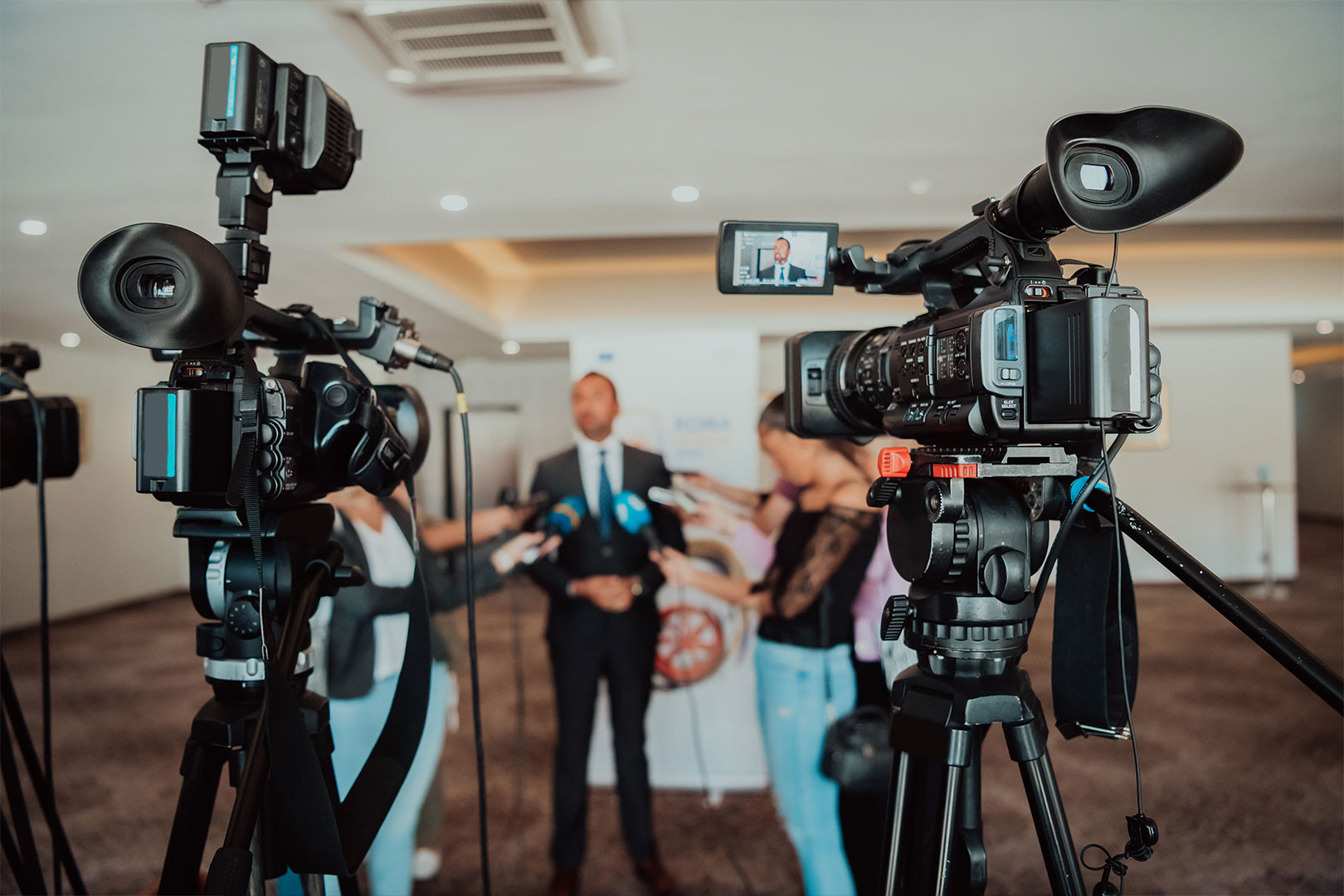
Press conference — cameras, journalists, spokesperson under scrutiny

What Ramon teaches

Six entry points. One objective.

There are six entry points into this work. The structure varies. The objective does not: to ensure that when your organisation is visible, it is controlled.

Core programme · Most requested

Media Training: Controlling the Narrative

This is where most clients start — before a major announcement, a leadership transition, or any situation where media exposure carries risk. A full-day, camera-on programme for executives, spokespeople and anyone who faces journalists. Simulated broadcast and print interviews, including hostile questioning, with immediate on-camera playback and critique after every exercise. You leave with three to five core messages tested under real pressure, a bridging technique that holds when the question is the one you did not want, and a recording that shows exactly what changed between the first exercise and the last.

What you practise: hostile question handling · bridging technique · doorstep interview scenarios · press conference Q&A · message retention under sustained pressure

Request Availability →
FormatOne full day, in person
AudienceExecutives, spokespeople, NGO directors, PR leads
DeliveredOn location across Southeast Asia
IncludesFilmed session recording, written critique, personal action plan
02

Crisis Communications

After 24 hours, the narrative is no longer yours. Live crisis scenarios — recall, reputational attack, legal threat — with real-time media calls simulated as they happen. What to say, what never to say, how to hold a press conference under fire, and how to manage journalists and social media without one feeding the other.

Crisis · PR · Corporate Affairs
03

Presentation & On-Camera

Being watched and judged is a skill, not a talent. You will be filmed from the first exercise. Every filler word, every moment of lost authority goes on the playback screen. Then you fix it. Voice control, physical presence, eye contact and the mechanics of holding a room you cannot fully see.

Leaders · Entrepreneurs · Public Figures
04

Video & Social Media Presence

Your digital presence is a media channel. Presenting to a smartphone camera alone in a room is significantly harder than it looks. Short-form message architecture, eye line discipline, projecting authority without a studio — and why most executive video content is forgettable.

Entrepreneurs · Thought Leaders · Personal Brand
05

Podcast & Radio Interviews

Audio exposes everything. No body language, no visual authority. Voice modulation, pacing, answers complete in 45 seconds without sounding rehearsed. Live versus pre-recorded, handling a host who goes off-script, turning a 20-minute interview into three usable clips.

Executives · Thought Leaders · Authors
06

Bespoke Team Programmes

For PR departments, communications teams and C-suite cohorts. A full programme designed around your organisation's specific vulnerabilities: your sector's journalists, your typical risk scenarios, your brand voice. Assessment first, design second, delivery third. The team that trains together responds together.

Teams · Corporations · Institutions

Training formats

Structured around your exposure, not a fixed programme.

The intensity, duration and structure are determined by what you are preparing for. Engagement is built around your risk, your timeline and your people — not around a standard workshop catalogue.

Format 01

One-Day Intensive (1:1)

A full day of immersive, one-on-one coaching tailored entirely to you. Camera work, interview simulations, real-time feedback, personal action plan. Available on location anywhere in Southeast Asia.

Most popular for executives

Format 02

Three-Day Seminar

Deep-dive training over three days for individuals or small groups. Filmed simulations, individual critique, group exercises and briefed scenario work. Suitable for corporate teams or public format.

Groups & corporate teams

Format 03

Hosted Public Workshops

Ramon Stoppelenburg does not sell tickets directly to the public. If your company, conference or venue wants to host an open-enrolment workshop, you organise it — he delivers it. The hosting party handles registrations, venue and logistics.

Bangkok · Singapore · KL · HCMC

Format 04

Bespoke Corporate Programme

Custom programmes for organisations, aligned to your communications strategy, media environment and risk profile. Ramon works with PR teams, comms departments and C-suites from design through to debrief.

Enquire for pricing

Format 05

Crisis Preparedness Workshop

A half-day or full-day scenario-based exercise: simulated media calls, social media pile-ons, a difficult press conference. You find out where your gaps are now — not during the real thing.

Recommended annually

Note

In-Person Only

All training is in person. No remote, online or hybrid sessions. The organising party arranges travel, accommodation and logistics. That is the deal.

No exceptions

On-camera media training
Workshop in progress
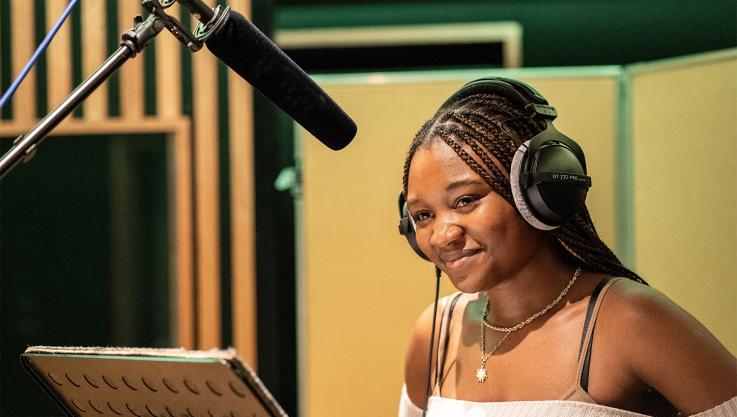
Media training in progress

What this produces

Capabilities your organisation does not have until it has done this once.

This is not a list of skills. It is a description of what your organisation has after a session that it did not have before.

Reduced interview risk

Spokespeople have been tested on the specific questions most likely to damage your organisation's reputation. They leave with a tested answer to the question they were hoping would not be asked.

Aligned executive messaging

Before training, different spokespeople describe your organisation differently in unscripted settings. After training, they deliver the same three core messages in their own words. A journalist who interviews two of them in the same week receives a consistent picture.

Faster crisis response

Participants who have run a simulated 24-hour crisis make better decisions faster when a real one arrives — because they have already experienced making a statement when facts are incomplete and the journalist is filing in thirty minutes.

What clients say

Used by organisations before moments that matter.

★ ★ ★ ★ ★

We brought Lord Penh in to prepare our regional spokespeople ahead of a high-profile product launch. The difference in confidence and message clarity was immediately visible. Our Bangkok press conference was the best we have ever run.

Priya Anantharaman

Regional Head of Communications, Consumer FMCG — Singapore

★ ★ ★ ★ ★

I have done media training in London and New York. This was better — because it was built around how Southeast Asian media actually works. Three weeks after the session, I handled a difficult press inquiry on a sensitive transaction. I knew exactly what to say and what not to say. The crisis scenario exercise alone was worth the entire programme.

Dato' Farouk Hussain

CEO, Infrastructure Development Group — Kuala Lumpur

★ ★ ★ ★ ★

After the one-day intensive, my team handled a very difficult interview with a major broadcaster — calmly, on-message, with no surprises. Before the training, that interview would have gone badly. I genuinely don't know how we managed before.

Sothea Meng

Executive Director, Regional Development NGO — Phnom Penh

★ ★ ★ ★ ★

I was preparing for a TED talk and an international press tour. The presentation coaching was forensic — my delivery was transformed. People still comment on how natural I look on stage.

Nguyen Thanh Tung

Founder & CEO, Tech Startup — Ho Chi Minh City

★ ★ ★ ★ ★

The crisis communications workshop was a revelation. We ran a simulation and discovered exactly where our gaps were — before a real crisis could expose them. Invaluable. It is now in our annual programme.

Ratna Dewi Kusuma

VP Corporate Affairs, Hospitality Group — Bali / Jakarta

★ ★ ★ ★ ★

I had been dreading an investor video series for months. After two sessions I filmed the whole thing in a day. Clear, confident, compelling. The investors noticed immediately.

James Whitfield

Managing Partner, Private Equity — Bangkok

Frequently asked

Key questions.

Because the media landscape here is not London or New York. How journalists operate in Bangkok, Kuala Lumpur or Jakarta — the dynamics, the culture, the pressure points — is different. Ramon Stoppelenburg is based in the region, has worked across its media for over 15 years, and builds every training around the environment you actually operate in.
Ramon Stoppelenburg is based in Phnom Penh and has delivered training in Bangkok, Chiang Mai, Ho Chi Minh City, Hanoi, Singapore, Kuala Lumpur, Jakarta and Bali. He travels across the region for both individual and group bookings. If your city is not on the list, ask — it can usually be accommodated.
All training is delivered personally by Ramon Stoppelenburg — Dutch journalist, author, broadcaster and media trainer. Ramon Stoppelenburg has over 15 years of experience working across European and Asian media as a writer, reporter and communications adviser. He brings genuine editorial insight into what journalists are actually looking for and how to use that to your advantage. There are no associates, no subcontractors and no junior trainers. When you book Lord Penh, you get Ramon Stoppelenburg.
The day begins with a briefing to understand your role, your messages and your specific challenges. Then it is straight into practical work: filmed interview simulations, immediate playback and critique, message discipline exercises, handling difficult or hostile questions, and — if relevant — crisis scenario work. You leave with a recording of your sessions and a personal action plan.
Training is primarily delivered in English, which is the working language for most of the media interactions clients prepare for. For Dutch-speaking clients, training in Dutch is available. For other languages, Ramon works with trusted local partners in key markets.

More questions? Read all FAQs →  ·  Email Ramon Stoppelenburg directly — response within 24 hours.

How it works

All training is booked through an organising party.

All training is commissioned by an organising party — corporation, institution, event host or PR firm. If you are an individual, ask your employer or a local conference organiser to make the booking. Here is how it works.

01

You make contact

Reach out by email with a brief description of what you need: format, audience, location and approximate dates. Ramon Stoppelenburg will respond within 24 hours. A setup requirements checklist is sent with every booking confirmation.

02

Scope and proposal

A short briefing call or exchange to understand your requirements. A written proposal follows, covering programme outline, logistics and fees. No surprises.

03

Agreement and deposit

Once the proposal is agreed, a simple letter of agreement is signed. A 50% deposit is required to confirm the booking. The remainder is due on the day of training.

04

Expenses covered by organiser

For training outside Phnom Penh, all travel, accommodation and on-the-ground expenses are covered by the organising party, either directly or reimbursed at cost. This is agreed in advance and itemised clearly.

Individual enquiries Individuals cannot book directly. Ask your employer, professional association or a local conference organiser to commission the training. Ramon Stoppelenburg handles everything from there.

For organisations preparing for media exposure, leadership visibility or reputational risk.

Ramon Stoppelenburg works with a limited number of clients each month. All engagements are delivered personally, in person, across Southeast Asia. Day rates start from USD 1,500. To request availability, email with your context, location and timeline.

Request Availability →